 English,
 Spanish,
 Polish,


Free Consultation
630-932-9100

-

- Home
- Our Firm
- Practice Areas
- Divorce
- Alimony and Maintenance
- Child Support
- College Expenses
- Special Needs Children and Divorce
- Parental Responsibility / Custody
- Sole Custody vs. Joint Custody
- Parenting Plans and Visitation
- Child Relocation
- Property and Asset Division
- Retirement, 401k Accounts and Pensions
- Debt Division
- Post Decree Modifications
- Post Decree Enforcement and Contempt Hearings
- Dissolution of Arranged Marriages
- Tax Consequences and Divorce
- Uncontested Divorce
- Divorce Involving Mental Health Issues or Addictions
- Divorce and the Stay-at-Home Parent
- Divorce FAQs
- Family Law
- Personal Injury
- Motor Vehicle Accidents
- Auto Accidents
- Truck Accidents
- Amazon Delivery Driver Accidents
- Motorcycle Accidents
- Rideshare Accidents
- Pedestrian Accidents
- E-Bike/E-Scooter Accidents
- Boat Accidents
- Aviation Accidents
- Premises Liability
- Medical Malpractice
- Nursing Home Abuse
- Wrongful Death
- Construction Site Accidents
- Other Serious Injuries
- Personal Injury FAQs
- Workers' Compensation
- Construction Accidents and Injuries
- Warehouse and Factory Worker Injuries
- Healthcare Worker Injuries
- Office Worker Injuries
- Shipping and Trucker Worker Injuries
- Types of Workers' Compensation Injuries
- Back and Neck injuries
- Repetitive Stress Injuries
- Arm and Shoulder Injuries
- Knee Injuries
- Occupational Diseases
- Specific Accident Cases
- Who We Represent
- Workers' Comp Death Benefits
- Filing a Workers' Comp Claim
- How to Qualify for Benefits Under Workers' Comp
- Vocational Rehabilitation Rights
- Workers' Compensation FAQs
- Criminal Defense
- Immigration
- Bankruptcy
- Estate Planning
- Real Estate
- Divorce
- Success Stories
- Testimonials
- Media
- Blog
- Contact Us
Recent Blog Posts
Accommodations and Issues: Immigrating While Disabled
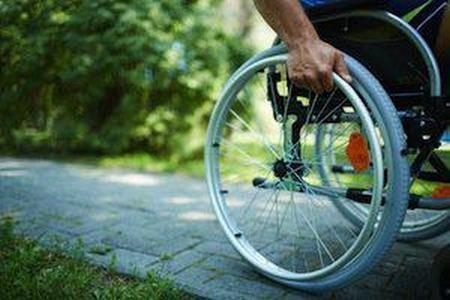 The disabled, like everyone else, are entitled to a fair review of their applications to immigrate to the United States. However, many times, they are ruled inadmissible solely because the law meant to protect the public has not been updated along with the times. If you are disabled and wish to immigrate to the United States, there are factors of which you should be aware.
The “Dangerous Behavior” Bar
8 U.S. Code § 1182 provides that someone with a physical or mental disorder that may be dangerous to property or safety and welfare of the person or others (or a “history of behavior” associated with the disorder) is inadmissible. Proponents argue that this is in service of the public good—that anyone who has a history of violent or frightening behavior, regardless of intent, may cause harm to the people the law is designed to protect.
Others question exactly who the law is meant to protect. If someone has, for example, obtained counseling for his or her particular disorder, and has a long period of successfully managing their symptoms, it seems arbitrary and contrary to public policy to penalize them by denying them a visa. There is an appeals process if you are ruled to have a disability that renders you dangerous (or capable of ‘dangerous behavior’), but it is only to a medical board, not to a higher immigration authority.
Regardless of the possible punitive consequences, however, it is worth noting that this bar only applies if a person has both a “physical or mental disorder” and a pattern of behavior related to the disorder that could be potentially dangerous. The definition of “physical or mental disorder” is vague, directing that an immigration official be guided by policy from the U.S. Department of Health & Human Services. However, in practice, much of these decisions are left up to the individual official’s discretion.
If a potential immigrant can provide documentation that shows a pattern of acceptable behavior and a lack of propensity to harm, he or she is often granted the visa they seek, at least partly due to this vagueness. If he or she is denied, disability waivers are also available.
The Public Charge Bar
The other reason that disabled people are sometimes denied entry to the U.S. is the so-called ‘public charge’ question. Anyone, not just a disabled person, is subject to a ruling of inadmissibility if they cannot prove they have sufficient support not to become a public charge under INA §212(a)(4). A public charge is someone who is primarily dependent on government assistance, rather than any kind of private income.
Despite the public charge bar being, in theory, applicable to everyone, it disproportionately affects the disabled. Officials have cited concern over the disabled person possibly losing his or her job or becoming more disabled over time (resulting in an inability to work), or in the case of those with mental disabilities, possibly becoming stranded in the country with no ability to take care of him or herself.
Contact an Immigration Attorney
If you or a loved one has a disability that might result in an inadmissible finding, having a professional on your side may make the difference between success and failure. The skilled DuPage County immigration attorneys at Mevorah & Giglio Law Offices have extensive experience in these types of cases, and are happy to put it to work for you. Contact us today to discuss your options.
Sexual Assault Survivor Rights to Terminate Parental Rights of Assaulters
 The trauma associated with a sexual assault or sexual violence can be extremely volatile. There are physical, emotional, and psychological wounds that may be near impossible to heal without significant assistance or time to help the survivor of sexual assault to get past the event. What makes this trauma even more difficult and overwhelming is the birth of a child who was conceived as a result of this violent and criminal act.
Parental Rights of Assaulters in Many States
Legislation put into place is attempting to remedy the effects that come from the birth of a child conceived as a result of sexual assault. In about half of the states, there are little to no protections of the mother against her sexual assaulter who may want to have a relationship with the child as the child’s father. Many of these states permit not only custodial rights, but also visitation rights, forcing the survivor of the sexual assault to maintain a relationship with her assaulter. Some states even give the father the right to prohibit the mother from putting the child up for adoption.
Underage Marriage in the United States
 When thinking about child marriage laws, many people’s first thought is of the child brides in third world countries in Africa or Asia. However, in a recent study, it seems that the child marriage laws in the United States and Canada have a lot more in common with Saudi Arabia, Niger, and Bolivia, than with Western Europe. This is because in the vast majority of countries around the world, minors under the age of 18 are not legally permitted to marry, or if they are, it is only with court approval and/or pregnancy. Many are currently pushing to increase the minimum age to marry regardless of parental consent and/or religious law all around the world, including the United States and Canada.
The United States
The United States, since the 1990s, has experienced a substantial increase in teen marriage due to the expansive proliferation of abstinence-only sex education. In many states in the U.S., many teenagers are able to wed at the age of 14 or 15. Though teen marriages at these ages are rare, the fact that most states set the minimum age at 16 still has an influential impact on teenagers, especially girls, who may be forced into marriage due to pressures exerted by the family and cultural conservatism within the community. In many states, the younger age limit is taken advantage of to push minors, who may be the victims of statutory rape, into a marriage to legitimize the misconduct that occurred.
Requests for Evidence and Notices of Intent to Deny
 Being in immigration proceedings is frightening for most people. When they are told that their offerings are not enough, it can get even worse. Yet, United States Citizenship & Immigration Services (USCIS) routinely requests further evidence from those in proceedings, for a variety of reasons. If you receive one of these notices, it is important to understand it fully and not panic.
Requests for Evidence
Requests for Evidence (RFEs) can come from any immigration official once you are in proceedings, at any stage of review from then on. While usually they are simply to address any gaps in your information, at times, they can be issued erroneously or even used as ways to fish for potentially damaging information that is not truly relevant to your case. The significant majority, however, are genuine requests for further information, or to clarify something that the officer feels has not been fully explained.
It is important not to panic if you receive one of these. An RFE does not mean that your case will be denied or that there is something fundamentally wrong. However, it does mean that you need to obtain the information in question and reply within the time frame stated. Usually, this is 90 days, though the specific amount of time you will have to reply will usually be stated in the request itself. It does also mean that you must be able to interpret what is being requested. Sometimes, the request may not cite any specific documents; it will merely ask, for example, for “further evidence” regarding a specific criteria of your application. A potential asylee may be asked to provide “further evidence” of their alleged persecution. In these situations, a good immigration attorney can be a huge advantage.
Notices of Intent to Deny
Where an RFE is not necessarily a moment to panic, if you receive a Notice of Intent to Deny (NOID), that is potentially more serious. A NOID is issued in a few different situations, some of which are:
Affidavit of Support: The Lifetime Alimony Duty of U.S. Citizens Married to Non-U.S. Citizens
 When you decide to marry a non-U.S. citizen and reside in the United States, there are significant bureaucratic obstacles that must be satisfied before you and your soon-to-be spouse can reside happily ever after. The one thing that many mixed-citizen couples do not take into consideration is the fact that once they have tied the knot, they are bound together for life, even if they decide to divorce.
Affidavit of Support
The United States, when permitting non-U.S. citizens to reside in the United States with their U.S. citizen spouses, requires that the U.S. citizen spouses sign an affidavit of support, which is an affidavit that the petitioner (usually the U.S. citizen) signs to declare that they will accept the financial burden and responsibility for the non-U.S. citizen so that the non-U.S. citizen does not become a ward of the state. In other words, by signing the affidavit of support, the U.S. citizen is agreeing to a legally enforceable agreement that he or she will provide lifetime alimony to their non-U.S. citizen spouse.
Still Locked Up: Post-Order Custody
 In a perfect world, a person who has come before an immigration judge has to wait very little time to move on with his or her life. However, given the United States’ extensive immigration court backlog and current culture of xenophobia, many immigrants who have been through the deportation and appeals processes still find themselves in legal limbo afterward, for reasons both appropriate and misguided.
Post-Order Custody
ICE used to be able to hold people indefinitely. However, in 2001, the Supreme Court decided the case of Zadvydas v. Davis, in which it was held that indefinite detention of (theoretically removable) aliens was impermissible in cases when the alien was not likely to be removed in the near future. In other words, if mere bureaucracy is holding up your departure, or a conflict that makes it temporarily unsafe to return to your home country, you are still permitted to be detained. If circumstances exist that mean your country will be unsafe or unreachable for the foreseeable future, you will be much more likely to receive a supervised release, or parole. While this decision only applied to admissible aliens, the court decided Clark v. Martinez three years later, extending the same standard to the undocumented.
Since Zadvydas was decided, the procedure underwent some modifications. Nowadays, after a final order has been entered in your case, Immigration & Customs Enforcement (ICE) has 90 days to remove you from the country. That period of time does not begin to run unless you have exhausted your appeals and there are no stays pending in your case. However, once it does begin to run, you must be removed during that 90 days. If you are not, you are entitled to a review of your detention.
If you are still in detention after the 90 days has elapsed, you are entitled to have your deportation officer conduct a review of your case. There are rare exceptions to this rule, namely if you have a communicable and dangerous disease or are a significant security risk, but otherwise, you are entitled to a review.
Am I Entitled to Review?
Not everyone is entitled to a review of their post-order status, but many are. In order to determine whether the Zadvydas or Martinez standards apply to you, you must fit the following criteria:
Pedestrian Deaths Continue to Rise on the Roads
Warning: stripos(): Offset not contained in string in /home/ocvaws/public_html/system-joomla-shared-core/components/com_easyblog/easyblog.php on line 6
Federal Agency Releases Two New Impaired Driving Reports
Warning: stripos(): Offset not contained in string in /home/ocvaws/public_html/system-joomla-shared-core/components/com_easyblog/easyblog.php on line 6
Criminal Charges for Immigration Violations
There is much misinformation out in the media about the legal nature of immigration violations. Many believe that if someone is present in the U.S. without documentation, they are committing a crime. Technically, this is not so, aside from in very exceptional cases. Others wonder why it matters--the answer is because a criminal record is a very different matter than a record of civil infractions, for immigration purposes and otherwise. If you are in the U.S. without documentation, it is absolutely imperative that you know what manner of act you have actually committed.
Unlawful Presence
Unlawful presence is exactly what it sounds like - being present in the United States without benefit of legal status. However, lack of ‘legal status’ can be somewhat misleading to the average person, making it sound as though it is a crime, when in reality, unlawful presence is a civil infraction.
It is interesting to note that Congress actually had the opportunity in 2005 to criminalize unlawful presence, and declined to do so. The Sensenbrenner Immigration Bill, the short name for the Border Protection, Antiterrorism and Illegal Immigration Control Act of 2005, would have made unlawful presence a felony, regardless of circumstance, but after demonstrations around the nation, the Senate voted the bill down.
The only time mere unlawful presence (without any compounding actions) can result in criminal penalties is if it occurs after a person has been formally removed from the country, and then returns without leave to do so. If someone re-enters the U.S. when they have a previous standing removal order, they are at risk of being arrested and sentenced to prison. Most sentences are around two years, but it can vary. If you entered the United States legally, but are accruing unlawful presence, you will likely be subject to deportation, but you have not committed any crime under U.S. law (with very rare exceptions).
Unlawful Entry
Unlike merely being present unlawfully, entering the country without inspection is a federal crime, according to 8 U.S.C. §1325. It can be a felony, but is most often characterized as a misdemeanor punishable by fines and/or jail terms of no less than six months (but normally no more than two years).
One might wonder how someone can be unlawfully present in the U.S. and not have entered unlawfully, but it is in reality quite common. Many who find themselves in this position legally obtain visas and then simply fail to leave before the visa’s expiration date. They enter the country legally, with inspection, but as soon as their visa expires, they begin to accrue unlawful presence. In that scenario, the person would be guilty of a civil infraction, but no crime has been committed.
If you entered the United States without inspection, you are guilty of both the civil infraction of unlawful presence, and the crime of unlawful entry. You are subject to deportation, but you may also be subject to fines and a two-year jail sentence.
Get An Immigration Attorney On Your Side
If you need help with a potential immigration violation, or you need guidance on which penalties you may be subject to, having a good immigration attorney on your side can make all the difference. The skilled DuPage County immigration and deportation attorneys at Mevorah & Giglio Law Offices have years of experience in these cases, and will do our very best to help you with yours. Contact us today.
Supreme Court Considers Broadening Hearsay Exceptions to Child Testimony
 In the United States, defendants who have been accused of domestic abuse are provided with the benefits of the law, regardless of whether they are guilty or innocent. Most times, victims of domestic abuse are not able to easily prove that they have been the subject of abuse by their perpetrator, either because they are scared of the abusers, they love the abusers (regardless of the treatment that they are receiving), and/or there is very little evidence that could be shown to the police. It becomes a he-said, she-said situation, which our criminal justice system has a hard time assessing and evaluating.
Hearsay Evidence Rules
In court, when oral or written statements are brought in as evidence, the law of “hearsay” governs the admissibility of the statements. Hearsay is any out-of-court oral or written statement that is brought in to assert the truth of the matter that is at issue. Except for some outlined exceptions, hearsay is generally not admissible as truth, but could be brought in for another purpose, such as showing that the person had a bias or had received notice, regardless of whether the information held within the statement is true or not.









Offices in 3 Convenient DuPage County Locations
Lombard
900 E. Roosevelt Road
Lombard, IL 60148
Phone: 630-932-9100
Fax: 630-932-9868
MAP & DIRECTIONS
Bloomingdale
134 N. Bloomingdale Road
Bloomingdale, IL 60108
Phone: 630-529-2400
Fax: 630-529-7630
MAP & DIRECTIONS
Naperville
Phone: 630-420-1000
By Appointment Only

 Make a Payment


